
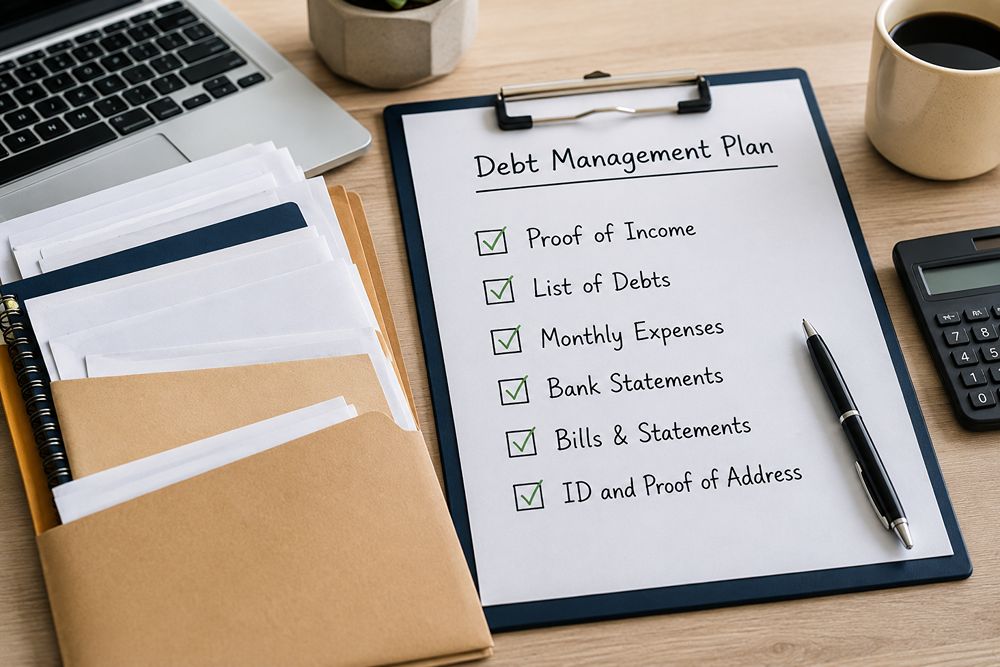
What Documents Do You Need Before Starting a Debt Management Plan?
Starting a Debt Management Plan is a positive step toward regaining control of your finances. Before a counselor or agency can recommend a repayment strategy, they need a complete picture of your financial situation.
Gathering the right documents ahead of time can make the process smoother, reduce delays, and help ensure your repayment plan is based on accurate information. Here’s what you should have ready before enrolling in a Debt Management Program.
Why Documentation Matters
A debt management plan is built around your income, expenses, and outstanding debts. Missing or outdated information can lead to an unrealistic payment plan.
Having complete records allows your counselor to:
- Calculate an affordable monthly payment.
- Review all eligible debts.
- Identify opportunities to improve your budget.
- Recommend the most suitable debt solution.
Preparation saves time and helps avoid surprises later.
1. Proof of Income
One of the first documents you’ll be asked to provide is proof of income.
Examples include:
- Recent pay stubs.
- Direct deposit statements.
- Social Security or pension benefit statements.
- Self-employment income records.
- Other recurring income documentation.
Your income helps determine what monthly payment is realistic without creating additional financial hardship.
2. A List of All Your Debts
Create a complete list of every debt you owe.
Include:
- Creditor names.
- Account numbers.
- Current balances.
- Minimum monthly payments.
- Interest rates, if available.
Leaving out an account may affect the overall effectiveness of your Debt Management Plan.
3. Recent Monthly Statements
Gather your most recent statements for each debt.
These documents help verify:
- Current balances.
- Payment due dates.
- Interest charges.
- Late fees.
- Account status.
Current statements are usually more reliable than relying on memory or online estimates.
4. Monthly Household Expenses
Your counselor will also need to understand where your money goes each month.
Prepare a list of expenses such as:
- Rent or mortgage.
- Utilities.
- Insurance.
- Transportation.
- Groceries.
- Childcare.
- Medical costs.
This information helps create a payment plan you can realistically maintain.
If you haven’t already created a spending plan, this article offers practical guidance: Creating a Budget
5. Bank Statements
Recent bank statements provide a broader picture of your financial activity.
They help verify:
- Income deposits.
- Regular expenses.
- Automatic payments.
- Available cash flow.
Having one to three months of statements is often helpful during the review process.
6. Identification Documents
Most organizations offering debt counseling or Christian Debt Services will ask for proof of identity.
Common examples include:
- Driver’s license.
- State-issued ID.
- Passport.
Identity verification helps protect consumers from fraud and ensures financial information is handled securely.
7. Credit Report (If Available)
Many counseling agencies can obtain your credit report with your permission, but having a recent copy yourself can be useful.
Reviewing your report beforehand allows you to:
- Identify unfamiliar accounts.
- Check for reporting errors.
- Confirm balances.
Under the Fair Credit Reporting Act, consumers have the right to dispute inaccurate information appearing on their credit reports.
What If Some Documents Are Missing?
Don’t panic if you cannot locate every record immediately.
Many creditors provide online account access, and financial institutions can usually provide duplicate statements. Starting the conversation early is often more important than having every document perfectly organized.
If you’re still deciding whether a debt management plan is the right option, this article may help: Can a Debt Management Plan Help Prevent Bankruptcy?
How a Debt Management Plan Differs from Other Solutions
A Debt Management Program focuses on structured repayment, while other options work differently.
For example:
- Debt Consolidation combines eligible debts into one payment.
- Debt Settlement attempts to negotiate a reduced payoff amount with creditors.
Choosing the right solution depends on your financial circumstances rather than simply selecting the fastest option.
For a clearer comparison, consider reading: What Is the Difference Between Debt Consolidation and Debt Settlement?
Questions to Ask Before You Enroll
Having your documents ready is only part of the preparation.
You should also ask:
- How is my monthly payment calculated?
- Which debts qualify for the program?
- What fees will I pay?
- How long is the expected repayment period?
- What happens if my financial situation changes?
Understanding these details helps you make an informed decision before signing any agreement.
To prepare for that conversation, this resource provides a helpful checklist: Questions to Ask Before Signing Any Debt Relief Agreement
Organization Today Can Make Repayment Easier Tomorrow
Collecting paperwork may seem like a small task, but it lays the foundation for a successful repayment plan.
Accurate financial information helps create a strategy that fits your income, supports consistent payments, and reduces the likelihood of future financial setbacks.
Conclusion
Starting a debt management plan begins with understanding your complete financial picture. By gathering your income records, debt statements, monthly expenses, and identification documents ahead of time, you’ll be better prepared to work toward a realistic and sustainable repayment plan.
If you’re ready to explore whether a debt management plan is the right fit for your financial situation, get in touch our team is available to help you review your options and take the next step with confidence.
