
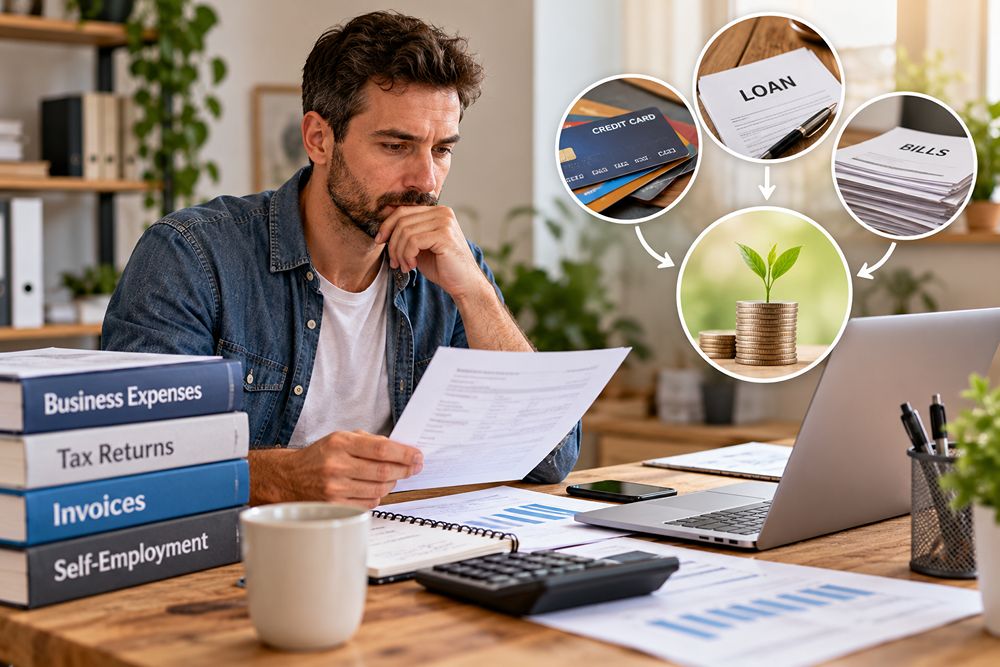
Can You Consolidate Debt If You Are Self-Employed?
Being self-employed comes with freedom and flexibility, but it can also make managing personal finances more challenging. Income may fluctuate from month to month, making it harder to keep up with credit card bills, personal loans, or other debts.
If you’re wondering whether you can debt consolidate while working for yourself, the good news is yes. However, qualifying for debt consolidation may look a little different than it does for someone with a traditional pay check.
Here’s what every freelancer, contractor, business owner, or gig worker should know before applying.
Does Being Self-Employed Affect Debt Consolidation?
Self-employment does not prevent you from qualifying for debt consolidation. Many lenders and counseling organizations work with self-employed borrowers every day.
The difference is that instead of relying on a W-2, they often look more closely at your overall financial picture, including:
- Consistent income history
- Monthly cash flow
- Existing debt obligations
- Credit history
- Ability to make regular payments
Stable income matters more than the type of employment.
What Documents Will You Need?
If you’re self-employed, expect to provide more financial documentation than someone receiving a regular salary.
Common documents include:
- Recent tax returns
- Bank statements
- Profit and loss statements
- Business income records
- Identification
- A list of current debts
Having these documents organized helps lenders or counselors better understand your repayment ability.
If you’re preparing your paperwork, this guide may help: What Documents Do You Need Before Starting a Debt Management Plan?
Your Credit Score Still Matters
Although income verification is important, your credit score also plays a significant role when applying for a consolidation loan.
Generally, lenders review:
- Payment history
- Credit utilization
- Total outstanding debt
- Length of credit history
A lower credit score does not automatically eliminate your options, but it may affect interest rates or loan terms.
What If Your Income Changes Every Month?
Irregular income is one of the biggest concerns for self-employed borrowers.
Instead of looking at one month’s earnings, many lenders review your average income over time. Demonstrating consistent revenue even if it varies seasonally can strengthen your application.
If your income is unpredictable, creating a realistic monthly budget before applying is often beneficial.
Debt Consolidation Is Not Your Only Option
A consolidation loan isn’t always the best fit.
Depending on your circumstances, alternatives may include:
- A Debt Management Plan
- Structured repayment through credit counseling
- Negotiated payment arrangements with creditors
Each option has different qualification requirements and repayment structures.
To understand one common approach, consider reading: How Does Christian Debt Consolidation Work?
Can Faith-Based Debt Consolidation Help?
Many self-employed individuals look for christian counseling debt consolidation, or christian debt consolidation services because they value financial guidance that reflects their personal beliefs.
These programs generally follow the same consumer protection laws as other counseling organizations while incorporating values-based financial education and accountability.
Whether you choose a faith-based or secular program, be sure the organization explains its services, fees, and repayment process clearly.
Beware of Unrealistic Promises
If a company guarantees approval regardless of income or promises to eliminate debt overnight, proceed with caution.
Under federal consumer protection laws, debt relief providers cannot use deceptive or misleading advertising.
The Federal Trade Commission takes enforcement action against companies that engage in unfair or deceptive debt relief practices.
Choosing a reputable provider is just as important as choosing the right repayment option.
If you’re evaluating organizations, this article offers useful guidance: How to Choose a Christian Debt Consolidation Service You Can Actually Trust
Questions to Ask Before Applying
Before enrolling in any program, ask:
- What income documentation is required?
- Will my monthly payment change?
- Are there enrollment or administrative fees?
- How long will repayment take?
- What happens if my income temporarily decreases?
A trustworthy provider should answer every question clearly before asking you to sign an agreement.
If you’re unsure what to ask, this checklist can help: Top 10 Questions Christians Should Ask Before Choosing a Debt Consolidation Program
Can Debt Consolidation Improve Financial Stability?
Debt consolidation does not erase debt, but it may simplify repayment by reducing the number of monthly payments you manage.
For self-employed individuals, having one predictable payment instead of several due dates can make budgeting easier during months when income fluctuates.
The key is selecting a repayment plan that fits your average income rather than your best month of the year.
Conclusion
Being self-employed does not prevent you from qualifying for debt consolidation. With organized financial records, realistic budgeting, and a clear understanding of your options, you may be able to simplify repayment while maintaining better control over your finances.
If you’re self-employed and looking for practical debt help through debt consolidation or faith-based financial guidance, get in touch our team is here to help you explore solutions designed around your unique financial situation.
