
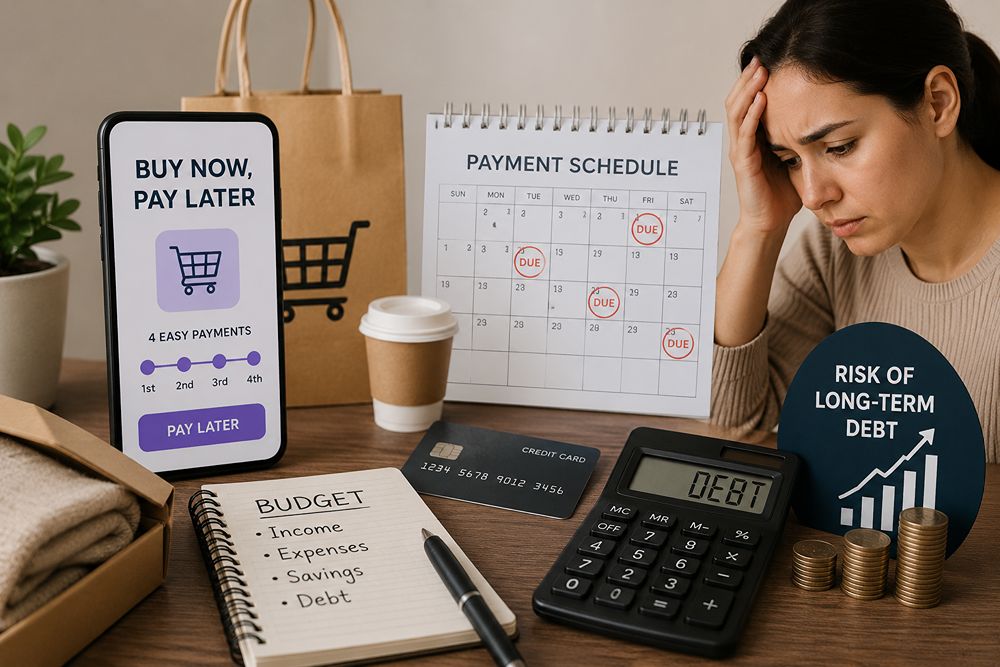
Can Buy Now, Pay Later Plans Lead to Long-Term Debt Problems?
Buy Now, Pay Later (BNPL) services have changed the way people shop. Instead of paying the full amount upfront, you can split purchases into smaller installments, often with no interest if payments are made on time.
While that sounds convenient, these plans can quietly create long term debt problems when used without a clear repayment strategy. Understanding both the benefits and the risks can help you decide whether BNPL fits your financial situation.
Why Buy Now, Pay Later Has Become So Popular
BNPL plans are easy to access and usually require only a quick approval process. They are commonly offered for online shopping, electronics, clothing, furniture, and even travel.
Many consumers choose BNPL because it:
- Breaks large purchases into smaller payments.
- Often offers interest-free promotional periods.
- Requires less paperwork than traditional loans.
Convenience, however, can sometimes encourage spending beyond your budget.
How Small Payments Can Turn into Bigger Financial Problems
A single BNPL purchase may seem manageable. The challenge begins when several plans overlap.
For example, you may have:
- One payment for a laptop.
- Another for furniture.
- A third for holiday shopping.
- A fourth for everyday purchases.
Individually, the payments look small. Together, they can strain your monthly budget and increase the risk of missed payments.
What Happens If You Miss a Payment?
The consequences depend on the provider and the agreement you signed.
Some BNPL companies may:
-
-
- Charge late fees.
- Restrict future purchases.
- Report payment history to credit bureaus.
- Refer unpaid balances to collections.
-
The Consumer Financial Protection Bureau has advised consumers to carefully review BNPL agreements because repayment terms, fees, and credit reporting practices vary by provider.
Does Buy Now, Pay Later Affect Your Credit?
Not every BNPL transaction appears on your credit report, but that is changing.
Some providers report:
- Late payments.
- Defaulted accounts.
- Certain loan products.
Others may perform a soft or hard credit inquiry depending on the financing option.
If you’re concerned about how borrowing choices influence your credit profile, you may find this article helpful: Does Debt Consolidation Hurt Your Credit?
When BNPL Becomes a Debt Cycle
The biggest risk is using new BNPL plans to manage existing financial obligations.
Warning signs include:
- Using multiple providers at the same time.
- Paying one installment with a credit card.
- Struggling to remember payment dates.
- Relying on BNPL for everyday essentials.
These patterns often indicate growing financial pressure rather than temporary convenience.
If several of these situations sound familiar, this related guide may help you assess your financial position: Debt Signs and Symptoms
Can Debt Consolidation Help?
If BNPL balances have been combined with credit card debt, personal loans, and other unsecured obligations, Debt Consolidation may be worth exploring.
Rather than managing multiple due dates, consolidation may allow you to simplify repayment into one structured monthly payment. Whether this is appropriate depends on your income, existing debts, and overall financial goals.
For readers who want to understand the process in greater detail, this article provides a useful explanation: How Does Christian Debt Consolidation Work?
Is Debt Settlement an Option?
Some people consider Debt Settlement after falling behind on multiple payments.
While settlement may reduce the amount owed in some situations, it can also affect your credit and may have tax consequences if qualifying debt is forgiven. It is generally considered only after carefully reviewing other repayment options.
To better understand the advantages and limitations, you may find this comparison useful: Debt Settlement: Advantages vs. Disadvantages
Tips to Use Buy Now, Pay Later Responsibly
If you choose to use BNPL, consider these practical habits:
- Limit yourself to one repayment plan at a time.
- Read the repayment schedule before purchasing.
- Set automatic payment reminders.
- Avoid using BNPL for everyday living expenses.
- Review your monthly budget before taking on another installment plan.
Small changes in spending habits can prevent larger financial challenges later.
Should You Avoid Buy Now, Pay Later Completely?
Not necessarily.
For some consumers, BNPL can be a useful budgeting tool when purchases are planned and payments comfortably fit within monthly income.
The problems usually arise when convenience leads to overspending or when multiple repayment plans accumulate faster than they can be repaid.
Like any form of borrowing, success depends less on the product itself and more on how responsibly it is managed.
Conclusion
Buy Now, Pay Later plans can provide flexibility, but they also require discipline. Understanding your repayment obligations, tracking multiple payment schedules, and borrowing within your means can help prevent short-term convenience from turning into long-term debt problems.
If you’re finding it difficult to manage multiple debts or wondering whether debt consolidation could simplify your finances, our team is here to help you explore practical solutions that fit your financial goals.
